Backbunker saves New York woman from minor argument
Alison Fuller, from New York, USA, thanks Backbunker for coming between her and an argumentative fel...
Sunk Capital announce a partnership with wearable entrenchment startup Backbunker, providing $19 billion of backing to help bring military-grade defensive positions to the street. Crime means nothing when you’re inside a steel-reinforced concrete bunker.
A remarkably low number, demonstrating effective safety protocols.
A lightweight, manageable solution to military-grade personal safety.
Each Backbunker is single-use. No need to pack up the deployed bunker.
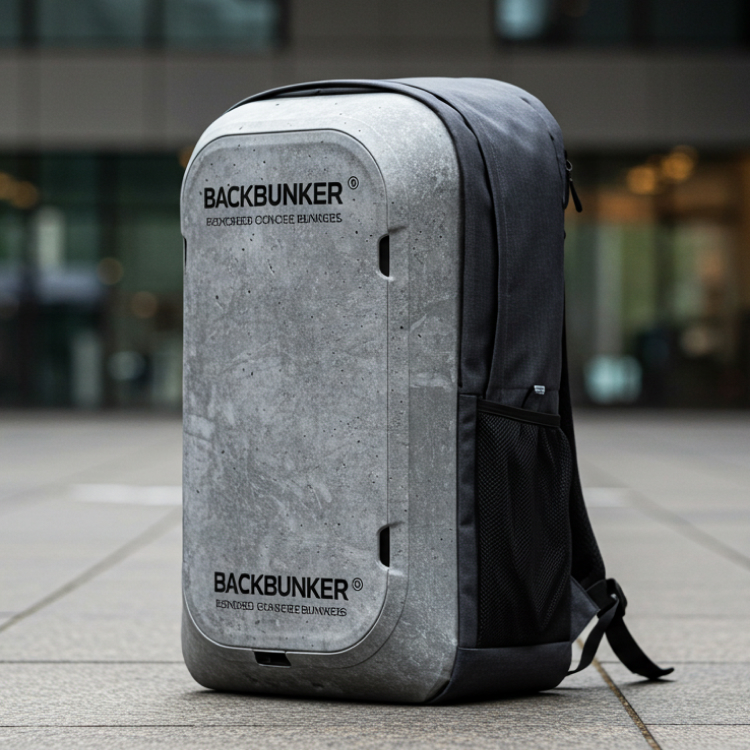
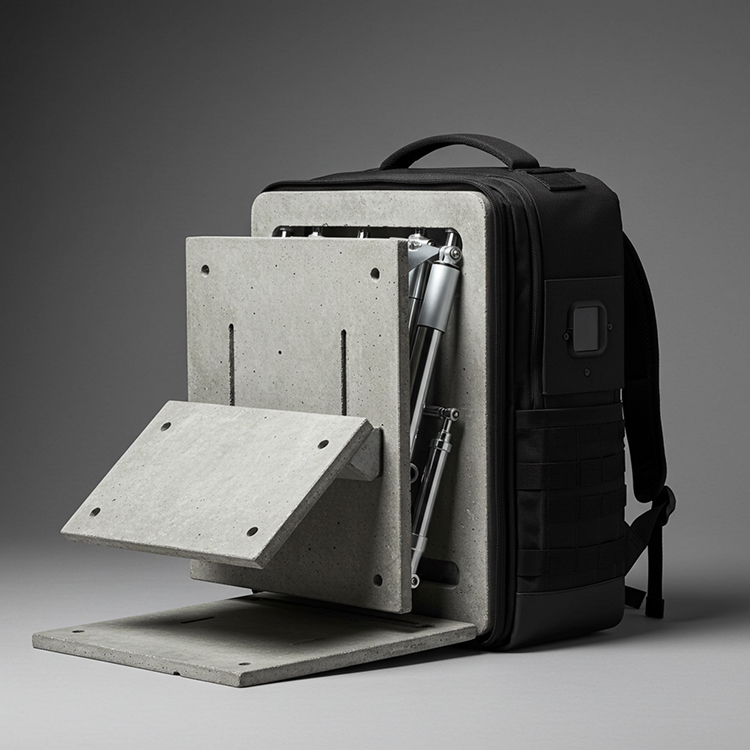
Backbunker is a technology startup with a mission to make military-grade personal safety available to everyone, everywhere. The Backbunker product is category defining – a backpack that can be deployed into a fully functioning military-grade steel-reinforced concrete bunker around the user.
The Backbunker is a single-use product with an anticipated price tag of $12.5m per unit on launch in Q1 2026. The backpack itself is designed for an ergonomic fit, with triple-padded kevlar straps and waterproof fabric. It has a weight of just 37 metric tons, and can fit into most overhead luggage compartments for easy travel storage.
Bergström dropped out of his second year of studying material science at the University of Vindhem to found Backbunker.
The first Backbunker design, codenamed TITAN, is finished and tested in public. The wearer is immediately killed on use, so Bergström brings on board an actual engineer to help with the designs.
Bergström announces a seed funding round of $1m, which covers 7% of the mounting legal bills for the wrongful death lawsuit from the previous year.
Barry Sunk sees Bergström on late night TV and calls him for a chat the next day. Impressed with the young entrepreneur's innovative spirit, Barry agrees to fund the Series A-K rounds simultaneously.
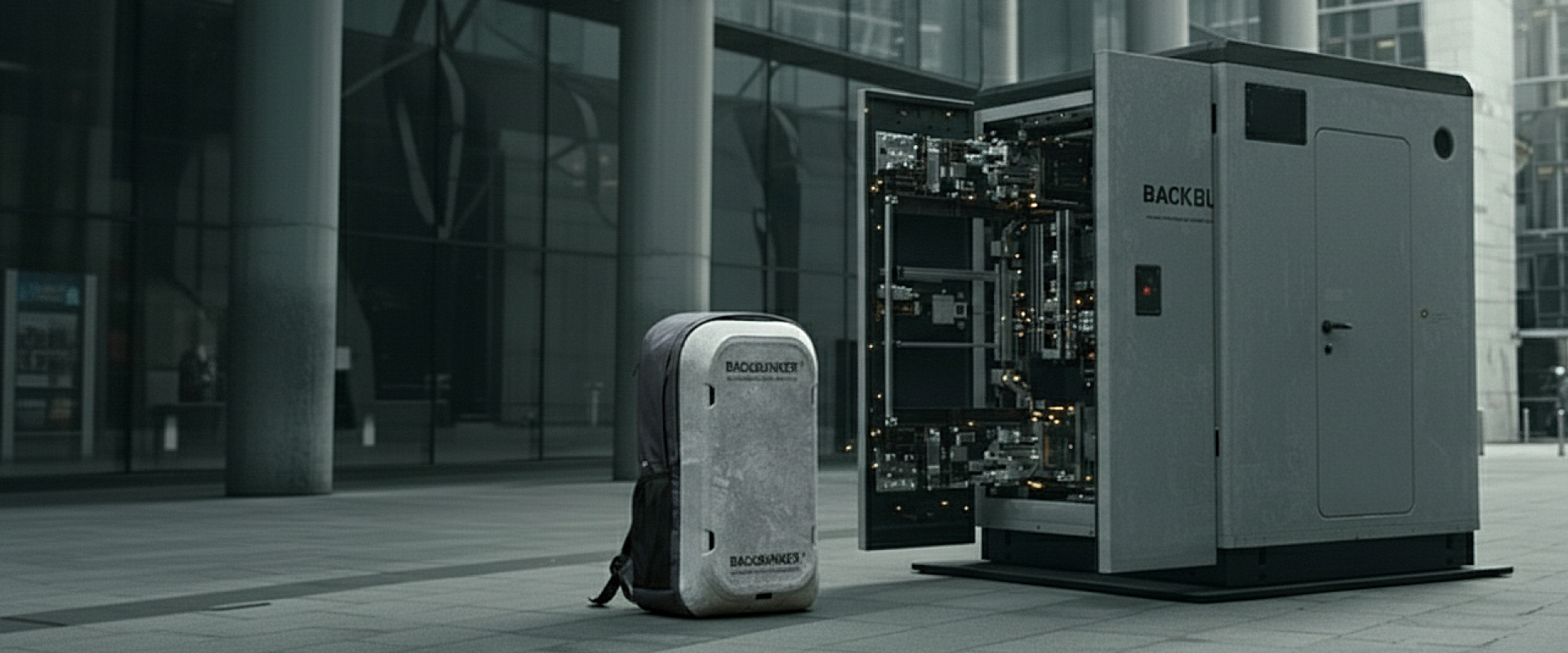
The Backbunker backpack and the deployed bunker side by side.
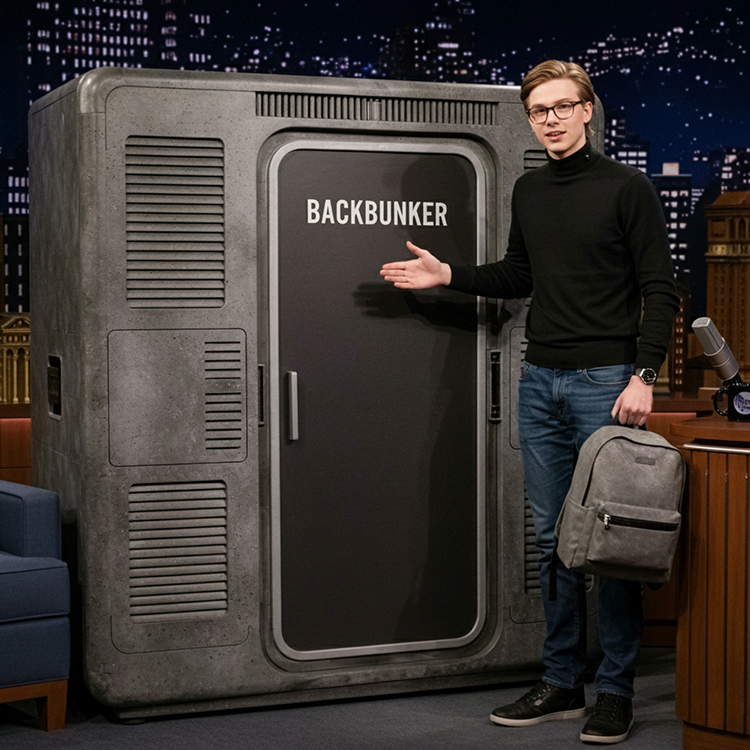
Fredrik Bergström has become somewhat of a celebrity over the last 12 months. With multiple late-night TV appearances demonstrating the TITAN prototype, Backbunker quickly grew to over 9m followers on TikTok.
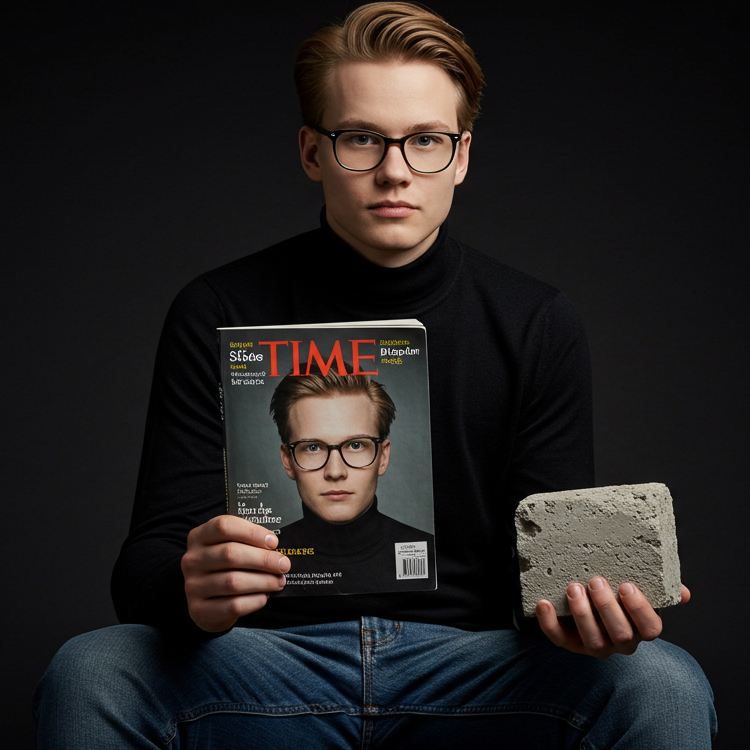
In August 2025, Bergström was featured on the cover of TIME magazine for his contributions to the improvement of public safety.
At the widely publicised TechnoVate summit in July 2025, Barry Sunk made a surprise appearance on stage with Bergström, signing the partnership declaration agreement before the world’s press and announcing over $19bn in funding for Backbunker, much to the dismay of shareholders.


The first 34 prototypes Bergström and his team developed had a number of systemic errors that helped them finally understand how to avoid the instant death of the wearer.
By prototype 35, which ultimately went into mass production in mid-2025, the Backbunker engineers had perfected the deployment mechanism and began exploring alternative approaches to cater for different customer tastes, such as anti-tank territorial fortifications.
The prototype pictured, #27 and affectionately codenamed “Twitchy Pete”, was the first Backbunker model to avoid killing its user outright. The man pictured, Senior Hydraulics Engineer Daniel Harwood, did ultimately die, but not before the bunker was fully assembled.
The Backbunker team chiselled his name as an act of remembrance on the bunker that was to be Mr Harwood’s last, however the structure was quickly demolished to avoid being submitted for evidence at trial.
The Backbunker is an incredibly sophisticated piece of technology. To make it easier to understand, Bergström has broken it down into three simple steps.
With the sudden online success of Backbunker and its charismatic founder, Fredrik Bergström, the brand has been catapulted to frontpage news and social media feeds.
A recent livestream of Bergström touring the Backbunker laboratory was watched by a record 1.4m people around the world, leading to over 150,000 pre-orders of the debut Backbunker system. With a retail price of $12.5m per unit, this puts Backbunker on track for Q1 revenues north of $1.8tn.
Demand for wearable entrenchment has proven to be so high that further products are now in development, including a range of Backbunker apparel as part of a wider line of merchandising.
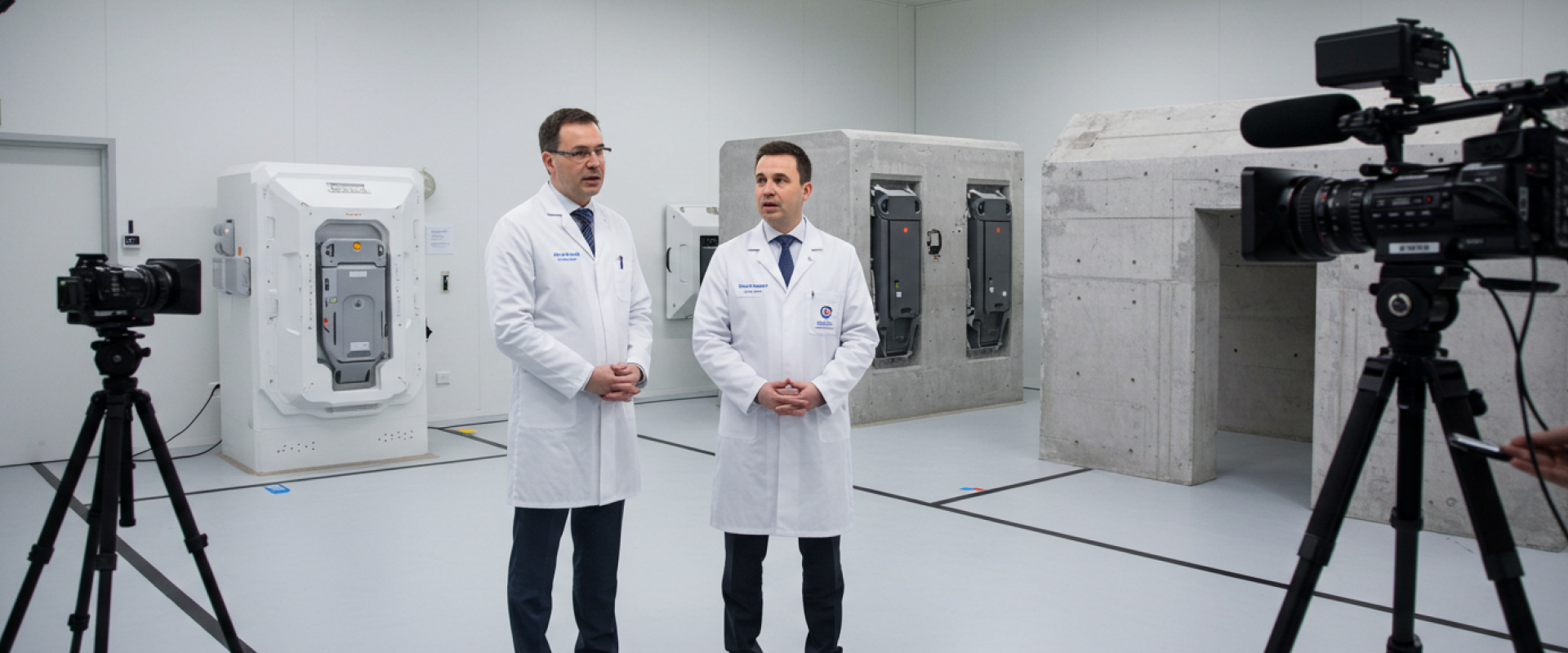
Backbunker Chief Scientist Lars Nilsson explains their technology.
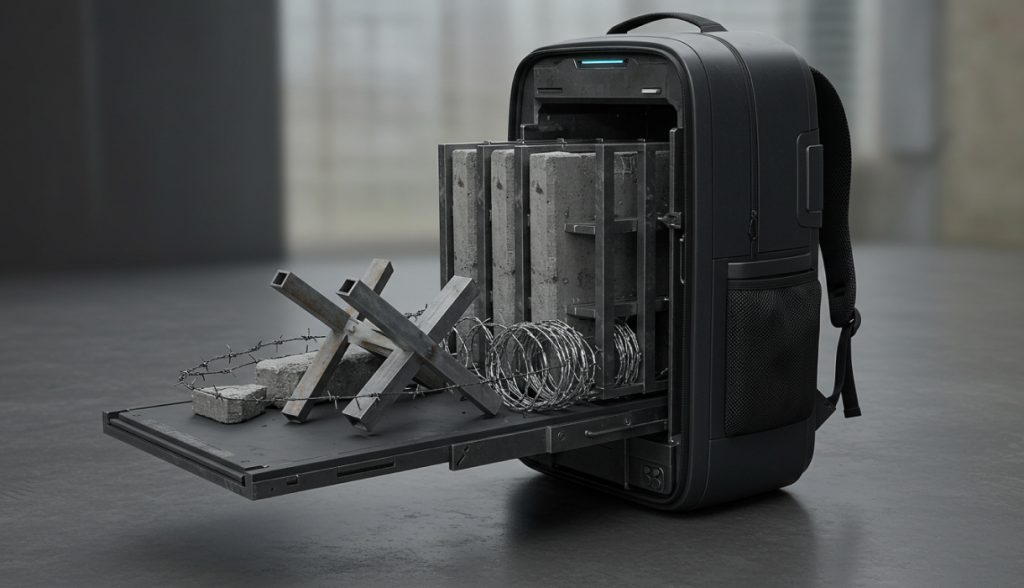
The demand for a greater variety of wearable entrenchment products has given the Backbunker engineers plenty of space to develop their ideas. One of these is the TRAP-PAC™, already at the working prototype stage.
Short for Tactical Restraint & Area Protection Pack, the TRAP-PAC™ provide portable area denial technology, including six tank traps, three kilometers of rolled barbed wire (packed with patented RazorRoll™ technology) and either 15 or 35 steel-reinforced concrete barricades depending on options chosen at checkout.
The third product, currently undergoing early field testing, is the TrackStop™. A more specialised backpack, this product provides portable roadblock components and includes several heavy duty concrete barriers, up to 100 pre-filled sandbags, 500m of razorwire and 45 feet of camouflage netting.
If you’re out and about about the city, perhaps in the store or even at work, and you suddenly find yourself with the need to block a critical road or track with military-grade defensive structures, then this is the perfect product for you.
The unit cost is expected to come in at $7.2m with a slightly higher pack weight of 84 metric tons.
Alison Fuller, from New York, USA, thanks Backbunker for coming between her and an argumentative fel...

To provide the best experiences, we and our partners use technologies like cookies to store and/or access device information. Consenting to these technologies will allow us and our partners to process personal data such as browsing behavior or unique IDs on this site and show (non-) personalized ads. Not consenting or withdrawing consent, may adversely affect certain features and functions.
Click below to consent to the above or make granular choices. Your choices will be applied to this site only. You can change your settings at any time, including withdrawing your consent, by using the toggles on the Cookie Policy, or by clicking on the manage consent button at the bottom of the screen.